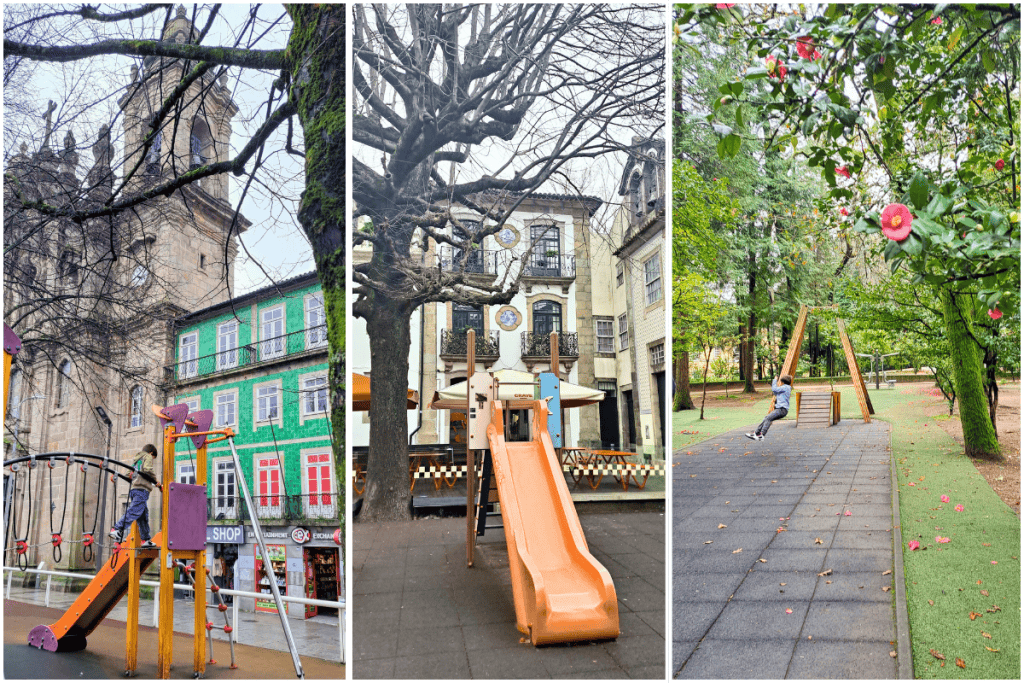
Homeschooling in Portugal is a legal but highly regulated form of education, fully integrated into the national school system. Children educated at home must remain enrolled in a Portuguese school, follow the national curriculum, and complete regular evaluations.
This guide explains how homeschooling actually works in Portugal, what the law requires, and what parents should realistically expect — especially families relocating with children who want clear, reliable information.
Who This Guide Is For
This article is written by a parent, for parents who are:
- Moving to or already living in Portugal with children
- Considering homeschooling or alternative education
- Looking for accurate, practical, high-quality information (not myths or social media assumptions)
- Trying to understand both the legal rules and the real-life reality
The focus is clarity, realism, and helping you make an informed decision for your family.
My Experience Before Understanding How Homeschooling Really Works in Portugal
Before my son started first grade, I already knew two things:
- I could not afford a high-quality private school — the kind that truly matched his learning style and my idea of child-centered education
- The Portuguese public education system did not fully align with what I imagined for his early learning years.
Nothing dramatic — just enough to make me look for alternatives.
I started exploring aprendizagem communities: small, alternative learning groups created by parents or educators who wanted a different rhythm of learning. I found several and tried to understand how these systems actually function.
What I genuinely liked:
- Small groups (often 6–8 children per adult)
- Flexible learning rhythms
- Plenty of outdoor time
- Respect for individual learning pace
Naturally, this led to the next question:
What about homeschooling? Is it legal — and how does it really work in Portugal?
Why I Eventually Didn’t Choose Aprendizagem Communities or Homeschooling
My decision was not about one specific group, but about a broader pattern:
- These communities are not legally recognized schools in Portugal
- Their structure and educational consistency vary widely
- The full academic and legal responsibility always falls on the parent
- Some educational philosophies did not align with our family values
In the end, I chose to keep my son in the Portuguese public system — a system I understand, can navigate, and can realistically support, both academically and financially.
That said, if you are considering homeschooling, you deserve the full and honest picture — not the romantic version.
Is Homeschooling Legal in Portugal?
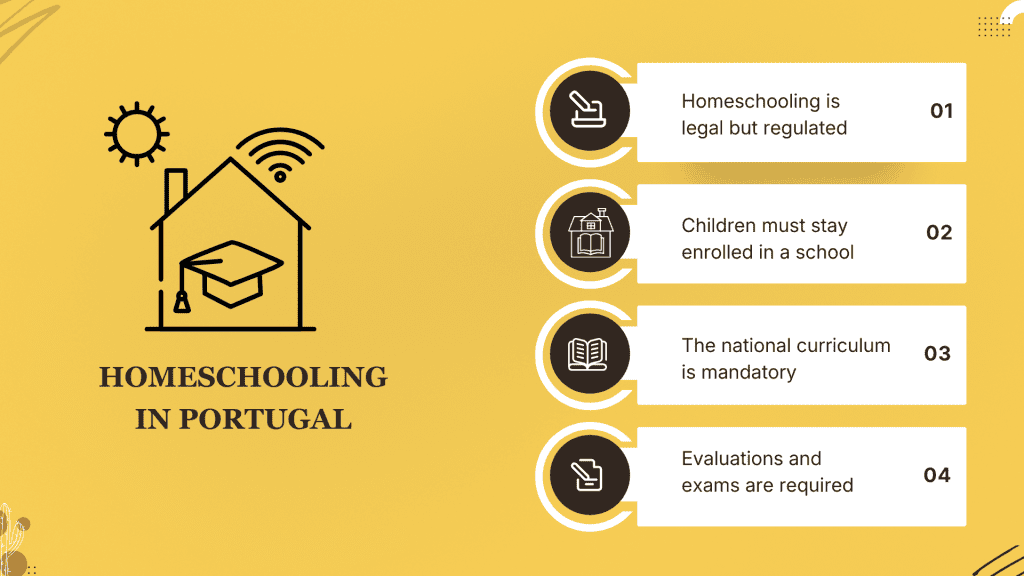
Yes. Homeschooling is legal in Portugal.
However, it is important to understand that it is highly regulated and closely monitored by the education system.
Homeschooling in Portugal is:
- Structured
- Supervised by schools
- Based on the national curriculum
It is not:
- Unschooling
- Curriculum-free learning
- An informal or unregulated option
The Two Legal Homeschooling Models
Portugal officially recognizes two models:
1. Ensino Doméstico (Home Education)
A parent or another adult living in the household teaches the child at home. That adult becomes the official educationally responsible person.
- The teaching adult must hold a university degree (Licenciatura)
- Degrees obtained abroad must be officially recognized in Portugal through DGES
2. Ensino Individual (Individual Teaching)
A qualified teacher teaches the child at home. The teaching adult must be a qualified teacher under Portuguese regulations
In both cases, the child must remain enrolled in a Portuguese public or private school, which oversees evaluations and progression.
How Homeschooling Works in Portugal: Step by Step
Step 1 — Enroll Your Child in a School
Even if your child studies entirely at home, enrollment in a school is mandatory:
- A public school in your area of residence, or
- A private school that accepts homeschooling students
This school becomes your administrative and evaluation point.
Good to know: your child keeps an official school place. If you later decide to return to regular schooling, reintegration is possible even mid-year.
Step 2 — Submit a Formal Request (Requerimento)
Parents must submit a written request to the school.
It usually includes:
- Parent identification (name, address, ID/passport, NIF)
- Child identification (name, birth date, address, NIF, school year)
- Chosen model: ensino doméstico or ensino individual
- Identification of the teaching person
- Proof of qualifications
- A short explanation of the family’s choice
The school may request additional documents or schedule an interview.
Step 3 — Interview and Collaboration Protocol
If approved:
- The family attends an interview
- A Collaboration Protocol is signed (valid for one academic year)
This protocol defines communication, responsibilities, evaluations, and deadlines, and must be renewed every year.
Step 4 — Teaching According to the National Curriculum
Homeschooling in Portugal is not curriculum-free.
Parents must:
- Follow the Portuguese national curriculum
- Teach all mandatory subjects
- Include Citizenship and Development
- Ensure grade-level progression
You may enrich learning or use alternative methods, but mandatory subjects cannot be skipped.
Step 5 — Evaluations and Exams
Homeschooled children must:
- Complete yearly evaluations at their school
- Take equivalency tests or national exams at key stages
- Demonstrate academic progression
The school validates results and advancement.
Legal Requirements vs. Real-Life Practice (Especially for Expats)
What the Law Says
- Curriculum and evaluations are in Portuguese
- National standards apply
- Exams are mandatory at later stages
What Often Happens in Practice
- Many expat children study partly in other languages
- Schools often accept bilingual approaches
- Early grades tend to be more flexible
- Schools intervene mainly if there is clear neglect
National exams in Portuguese usually become mandatory around Year 9.
This flexibility exists, but always within the system.
Who Homeschooling in Portugal May Not Be Right For
Homeschooling may not be suitable if:
- You are looking for unschooling or curriculum-free education
- You cannot commit daily time and structure
- You want to avoid exams, evaluations, or bureaucracy
- You expect homeschooling to be simpler than traditional school
Being honest about this protects both parents and children.
Alternatives to Homeschooling in Portugal
For families seeking flexibility without full responsibility:
- Public school + tutoring or enrichment activities
- Private or project-based schools
- Online learning as a complement (not a legal replacement)
Official Information and Legal References
- Direção-Geral da Educação — Ensino Doméstico e Ensino Individual
- Decreto-Lei n.º 70/2021
- DGES — Degree Recognition Portal
Homeschooling in Portugal is possible, but it requires clarity, consistency, and long-term commitment. It is not an easy shortcut — it is a structured educational path
If you are relocating to Portugal with children and want practical, parent-tested guidance, explore my relocation guide: Your New Life in Portugal — written by a parent, for parents navigating real life, not brochures.